📋 Table of Contents
In high-volume hospitality, moisture loss is the silent enemy that turns a premium cut of meat into a dry disappointment. According to research by the Michigan State University Extension, meat can lose up to 30% of its weight during standard dry-heat roasting, taking flavor and nutrients with it. For event planners in Fremont and the Tri-City area, the stakes are even higher when serving 500+ guests who expect the melting tenderness of Dum Pukht cooking.
At Zyka, we don’t just cook; we engineer environments where flavor is physically incapable of escaping. This ancient technique, often called the ‘Sous-Vide of Antiquity,’ uses hydrostatic pressure and sealed steam to achieve results that modern combi-ovens still struggle to replicate. Whether you are a marketing director organizing a corporate gala or a family planning a Zabiha Halal wedding, understanding the science behind the steam explains why our Goat Dum Biryani stays succulent from the first plate to the last.
The Physics of the Dum Pukht Cooking Technique
The core of Dum Pukht cooking lies in the ‘Parda’—a heavy dough seal that transforms a simple pot into a pressurized steam chamber.
Here’s the thing: most fast food Indian spots rely on par-boiling rice and mixing in pre-cooked meat, which leads to uneven textures. In contrast, true Dum Pukht involves layering raw or semi-cooked ingredients in a heavy-bottomed vessel (Handi), sealing the lid with a thick ribbon of wheat dough, and placing it over a slow, consistent heat source. As the internal temperature rises, the moisture within the ingredients turns to steam, but because it is trapped by the Parda, it creates a high-moisture, low-pressure environment.
- Steam Infusion: The trapped steam forces aromatic oil molecules from spices like cardamom and saffron deep into the fibers of the meat.
- Natural Tenderization: Collagen breaks down into gelatin at lower temperatures without the meat fibers tightening and squeezing out juices.
- Nutrient Density: Because no steam escapes, water-soluble vitamins and minerals are reabsorbed into the dish rather than evaporating.
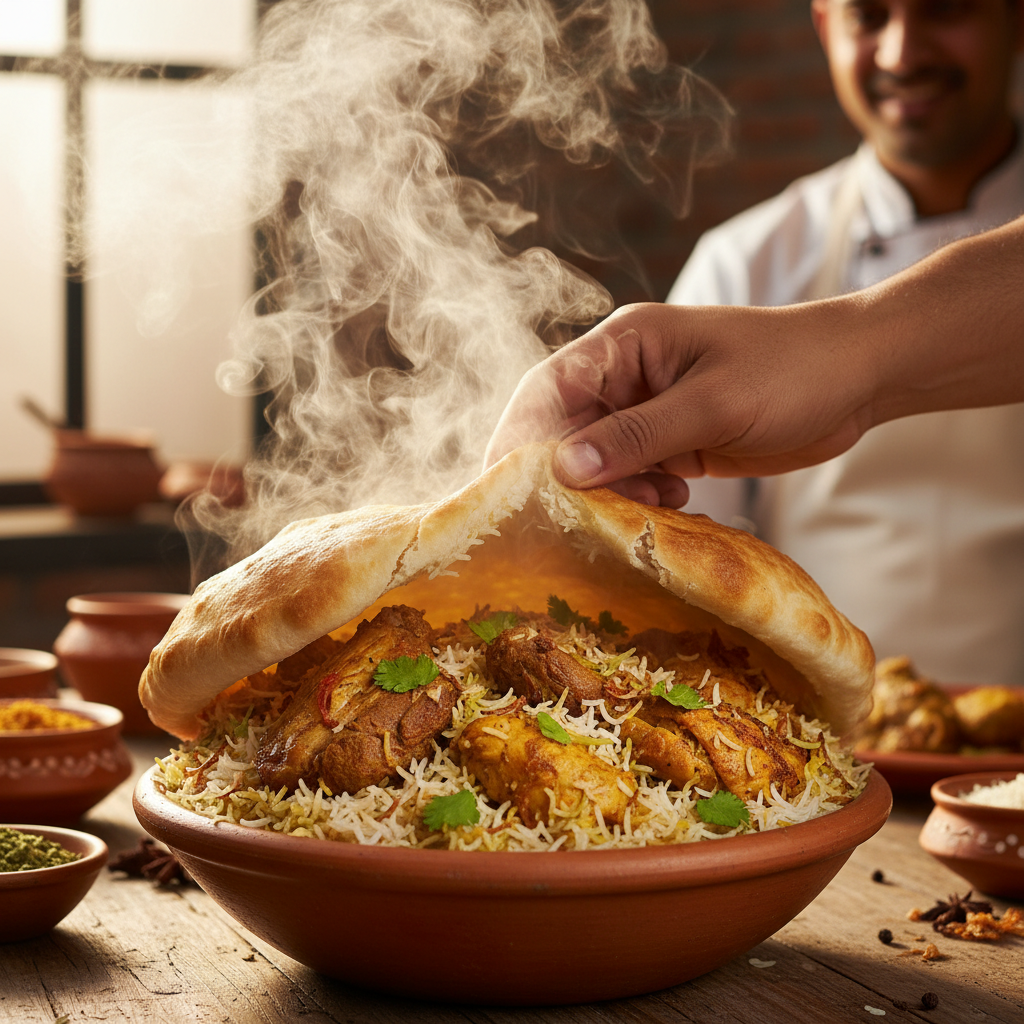
Why Sealed Vessels Beat Standard Ovens
Standard oven roasting relies on dry air circulation, which inevitably pulls moisture from the surface of the food. In a typical Bay Area mid-market corporate catering scenario, food often sits in warming trays, further dehydrating the protein. Dum Pukht cooking solves this by keeping the ingredients in a saturated state until the moment of service.
Scaling the Unscalable: Catering for 500+ Guests
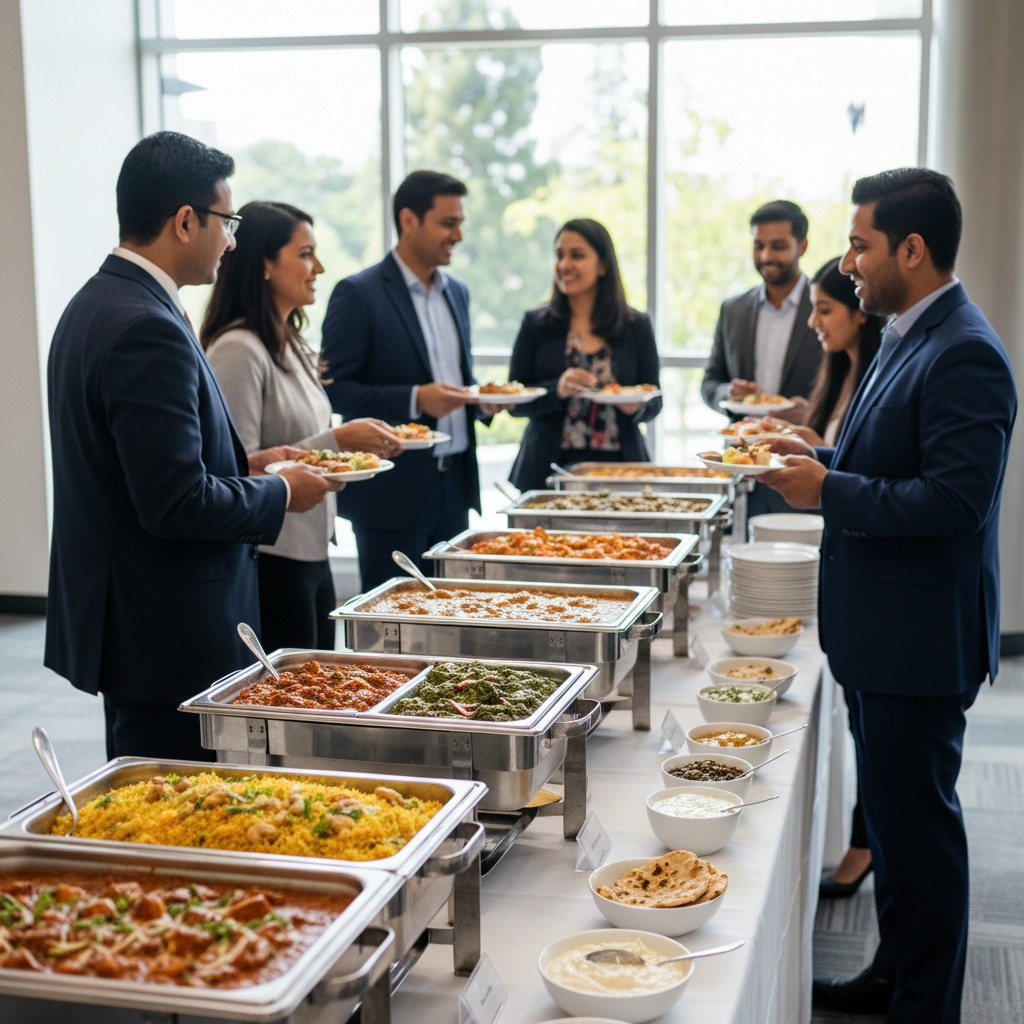
Maintaining the integrity of slow-steam infusion at a commercial scale requires a blend of heritage wisdom and modern logistics.
The real kicker? Most caterers shy away from authentic Dum Biryani technique for large groups because it is labor-intensive and requires precise timing. At Zyka, we have mastered the ‘Scaling of the Parda.’ By calculating the exact ratio of dough-to-vessel size, we ensure that even our largest catering batches maintain the same internal atmospheric pressure as a single-serving pot. This is critical for Zabiha Halal catering Fremont clients who demand both volume and ritual purity.
- Heat Management: We use heavy-gauge copper or clay vessels that distribute heat evenly, preventing the ‘hot spots’ common in thin stainless steel.
- Aromatic Volatile Retention: Science shows that aromatic compounds are highly volatile; by sealing the pot, we ensure these scents reach the guest’s plate, not the kitchen rafters.
- Consistency: Our process ensures that the bottom layer of meat is as tender as the top layer of long-grain Basmati rice.
Need a menu that stays fresh for a four-hour event? Request a catering quote to see how our slow-cooked methods outperform standard buffet fare.
Aromatic Flavor Preservation: Beyond the Spice Rack
True authentic Hyderabadi cooking isn’t about heat; it’s about the complex layering of volatile organic compounds.
What most people miss is that spices like cinnamon, cloves, and mace contain essential oils that degrade when exposed to open air and high heat. In the Dum Pukht cooking environment, these oils are gently extracted and held in suspension within the steam. This ‘Clean Label’ approach means we don’t need artificial flavor enhancers or excessive oils; the ingredients themselves do the heavy lifting. This is a major draw for health-conscious professionals and South Asian families who value the ‘ghar ka khana’ (home-cooked) feel in a professional setting.
| Feature | Standard Roasting | Dum Pukht Technique |
|---|---|---|
| Moisture Retention | Low (70-75%) | High (95%+) |
| Flavor Profile | Surface-level seasoning | Deep tissue infusion |
| Texture | Firm/Chewy | Velvety/Tender |
| Nutrient Loss | Significant via evaporation | Minimal; reabsorbed |
Zabiha Halal Integrity in Every Steam Cycle
For our Muslim community in Newark, Milpitas, and Fremont, the 100% Zabiha Halal promise is the foundation of every dish.
We believe that high-quality, ethically sourced meat deserves a cooking method that respects the ingredient. Unlike non-halal Indian restaurants that might prioritize speed over process, Zyka treats the cooking of Zabiha meats as a slow-motion art form. The Dum Pukht cooking method is particularly effective for Halal goat and lamb, which can be tougher if not handled with the precision of slow-steam infusion. By using our internal AI content engine, Ingest.blog, we track local dining trends to ensure our traditional methods meet the evolving tastes of the Tri-City area.
But wait—this isn’t just for traditionalists. Our younger ‘foodie’ audience loves how this technique translates into fusion. When we take Dum-cooked chicken and wrap it in a Biryani Burrito, you’re getting centuries of science in a modern, portable format.
The Sustainability Angle: Efficient Heritage Cooking
Modern event planners are increasingly looking for ‘green’ catering solutions that reduce energy waste.
The Dum Pukht cooking method is inherently energy-efficient. Because the vessel is sealed, it retains heat far more effectively than an open grill or a standard oven. Once the initial pressure is reached, the heat can be turned down to a whisper, allowing the residual thermal mass of the pot to finish the cooking. This ‘low and slow’ approach aligns with modern sustainability goals while delivering a superior culinary product. According to the U.S. Department of Energy, retaining heat in sealed environments is a primary way to reduce commercial kitchen energy consumption.
- One-Pot Efficiency: Reduces water usage for cleaning multiple pans.
- Residual Cooking: Uses 40% less active fuel compared to continuous high-heat methods.
- Waste Reduction: Higher moisture retention means fewer ‘dried out’ portions that end up as food waste.
Planning a sustainable corporate lunch in Milpitas? Contact us to discuss our eco-friendly, high-flavor catering options.
Conclusion: Why Steam is the Secret to Event Success
The real takeaway for any event host is this: moisture is flavor. When you choose Dum Pukht cooking, you aren’t just choosing a tradition; you are choosing a scientifically superior method of heat transfer that guarantees a premium experience for every guest. From the aromatic depth of our spices to the Zabiha Halal certification of our meats, Zyka brings the royal courts of Hyderabad to the modern ballrooms of the Bay Area.
Don’t settle for the dry, uninspired results of a standard traditional curry house. Experience the difference that precision steam infusion makes. Whether it’s a small family gathering or a 500-person corporate summit, our kitchen is ready to deliver excellence in every detail.
Ready to elevate your next event with the science of Dum Pukht? Request a custom catering quote today and taste the difference that heritage engineering makes.
Frequently Asked Questions
What makes Dum Pukht different from standard slow cooking?
While standard slow cooking uses low heat over time, Dum Pukht adds the element of moisture-lock cooking via a dough seal. This creates a pressurized environment that forces aromatics into the food and prevents any flavor evaporation, resulting in a more intense and tender dish than a standard crockpot or oven can produce.
Is Dum Biryani better for large events than other styles?
Absolutely. Because the Dum Biryani technique involves cooking the rice and meat together in a sealed vessel, the dish stays hydrated and flavorful even during transport and extended service times. It avoids the common catering pitfall of dry rice and chewy meat found in non-sealed cooking methods.
How does Zyka ensure 100% Zabiha Halal standards for catering?
We source all our meats from certified Zabiha Halal suppliers and maintain strict separation of ingredients in our Fremont kitchen. For our Zabiha Halal catering Fremont clients, this means total peace of mind, knowing that both the sourcing and the traditional cooking methods meet the highest religious and quality standards.
Can Dum Pukht techniques be applied to fusion dishes?
Yes! At Zyka, we apply aromatic flavor preservation to our fusion creations. For example, our Tandoori Tacos and Biryani Burritos utilize meats cooked with these traditional slow-steam methods, ensuring that even a modern, ‘handheld’ meal carries the depth and tenderness of a royal feast.